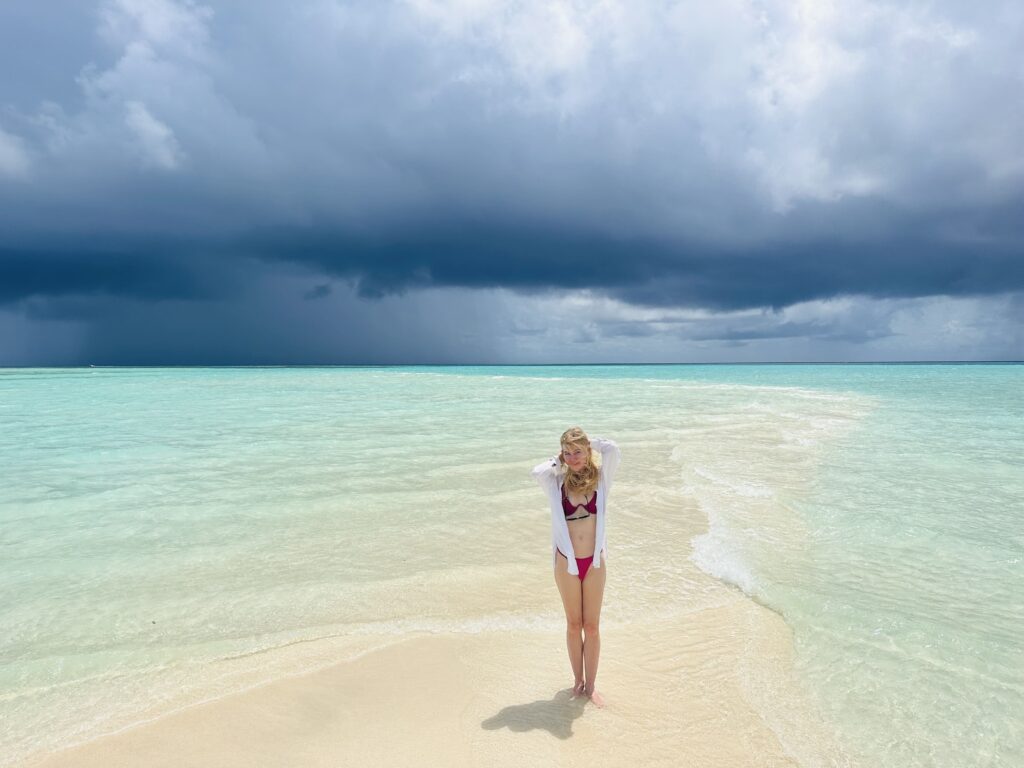
Like many people, I had always dreamed of visiting the Maldives. But I assumed it was reserved for the ultra wealthy or couples on their honeymoons.
So I was surprised to find out that the Maldives can actually be a budget-friendly destination — depending on where you go and how you spend your money.
In the Maldives, there are two types of islands: resort islands and local or public islands.
The resort islands are where the majority of tourists stay when they go to the Maldives. Each resort island is occupied by a single resort. With overwater bungalows and a staff catering to your every need, it’s a total dream.
It also costs a fortune. Hundreds — sometimes thousands — of dollars per night.
Until 2009, the only way to visit the Maldives was to spend a fortune at one of the resorts.
Fortunately, the government has since opened up the local islands to tourism. The local islands are *much* cheaper and allow you to catch a glimpse of the real Maldivian culture.
When I went to the Maldives in 2023, my ex and I spend 18 nights in Thulusdhoo, one of the local islands known for its surfing. On our last 4 nights, we splurged and stayed in an overwater bungalow on a luxury resort island. I spent probably days researching, looking for the best resort for the price and found Oblu Select Sangeli.
We paid $2,885 for four nights in an overwater bungalow. So it it was definitely not cheap — but everything was included for that price:
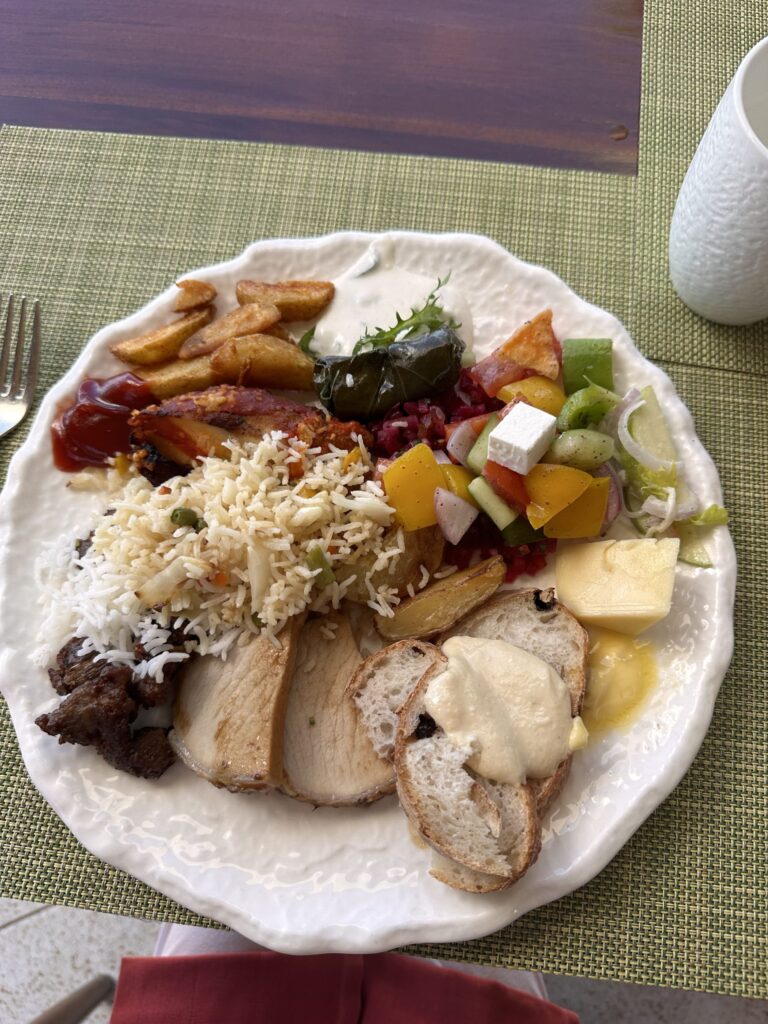
- Breakfast, lunch and dinner (and a delicious buffet of freshly cooked food)
- Snacks from 4-6PM
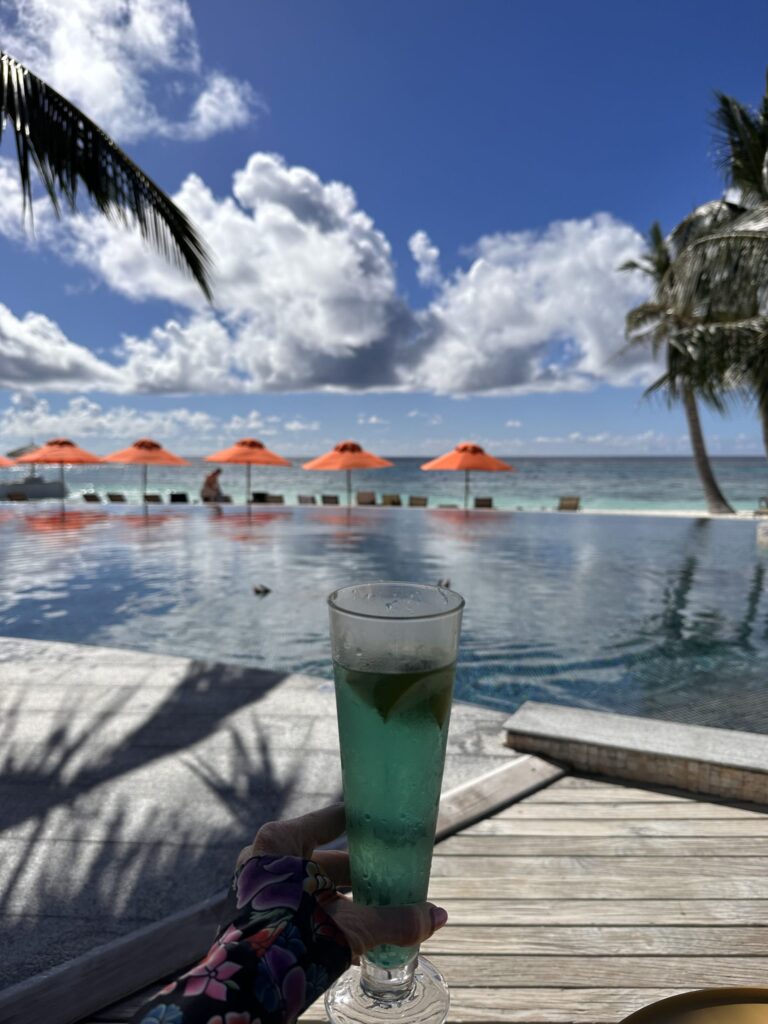
- Unlimited alcohol and drinks
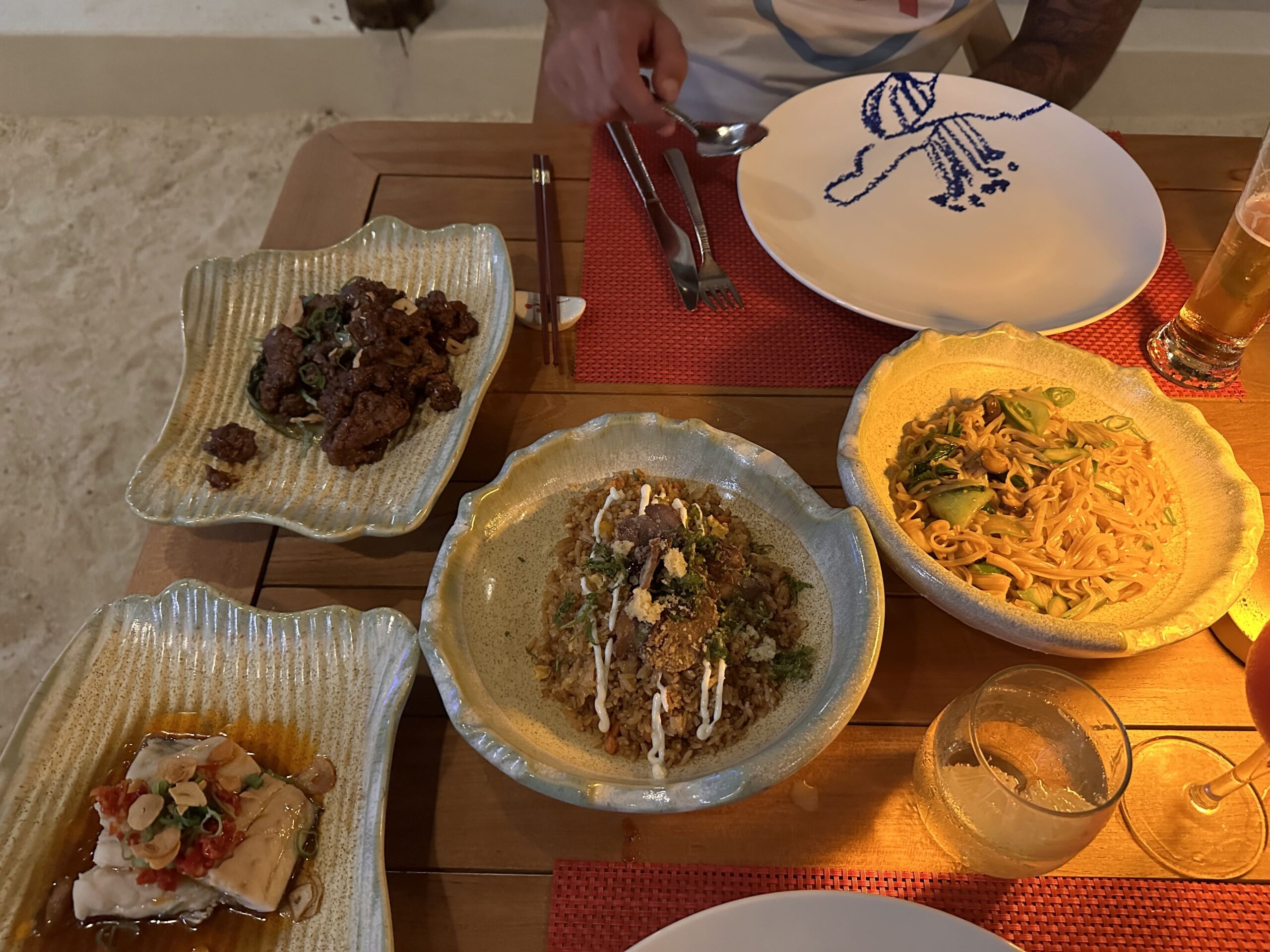
- Two a la carte dinners at specialty restaurants on site
- One sunset fishing excursion by boat
- One snorkeling excursion by boat
- Complimentary use of their snorkeling equipment, SUP paddle and kayak
- Minibar that was refreshed daily
- Housekeeping service once per day + turndown service
- Golf car service that would take us all around the island
- A spa treatment
- Complimentary roundtrip transfers by speedboat
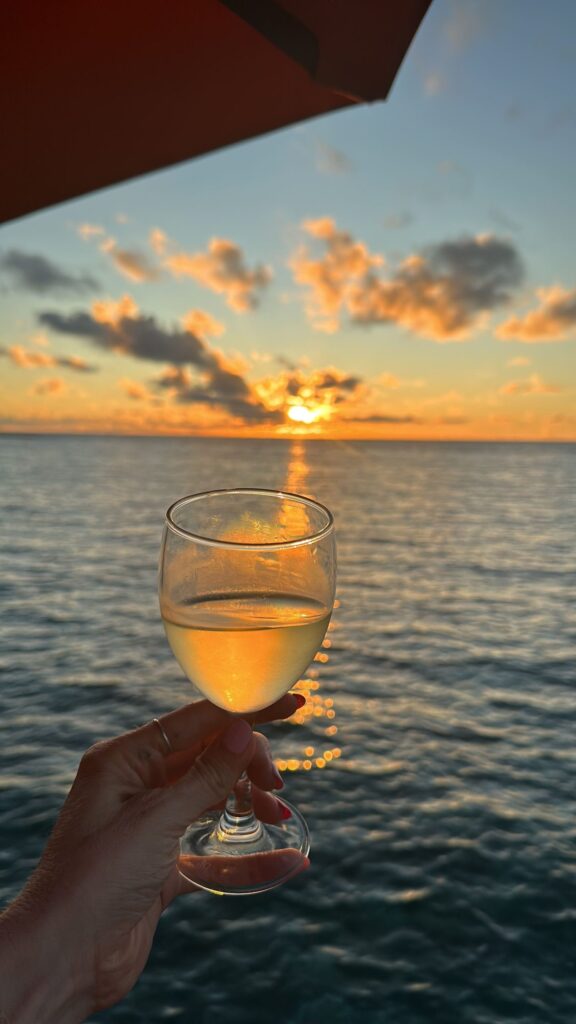
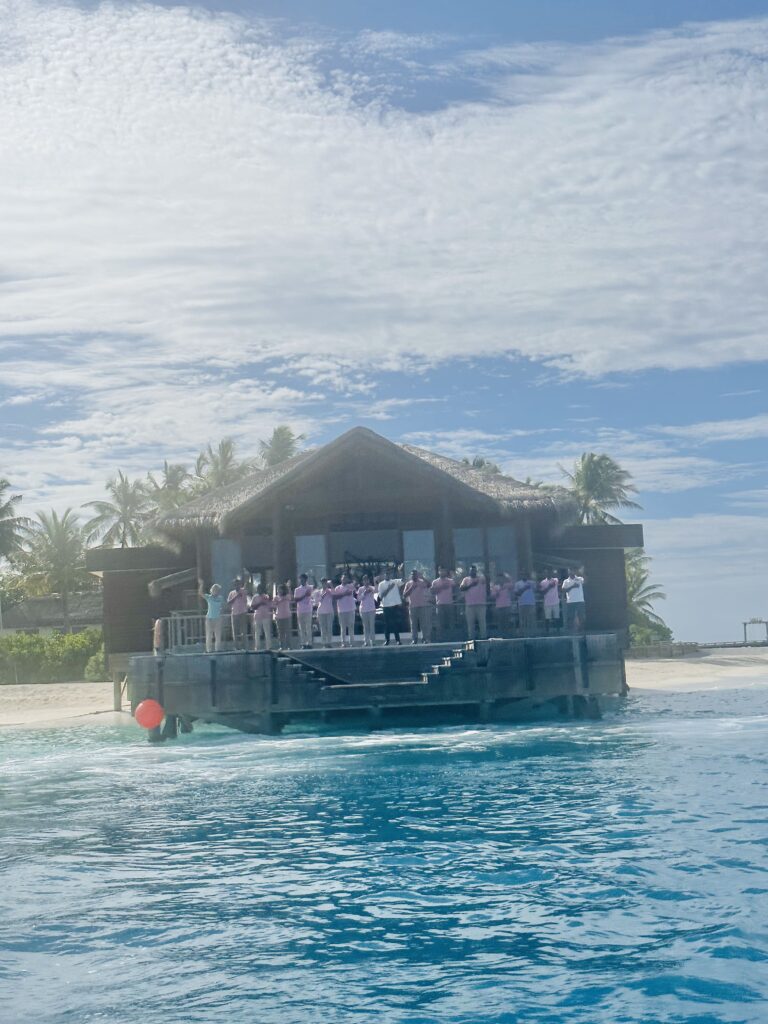
The service, food and entire experience was nothing short of incredible. When we arrived, the staff greeted us with champagne and a handmade leaf necklace. And when we left, they lined up in a row to wave goodbye.
That said…
You definitely don’t have to stay in an expensive resort like that to experience the Maldives. If you stay on one of the local islands, you’ll have a more authentic Maldivian experience — and save a lot of money.
I spent a total of $821.65 during my 18 days on the local island. Which comes out to just $45.64 per day. Granted, my ex did pay for a big portion of our hotel (which was around $100 per night). But still.
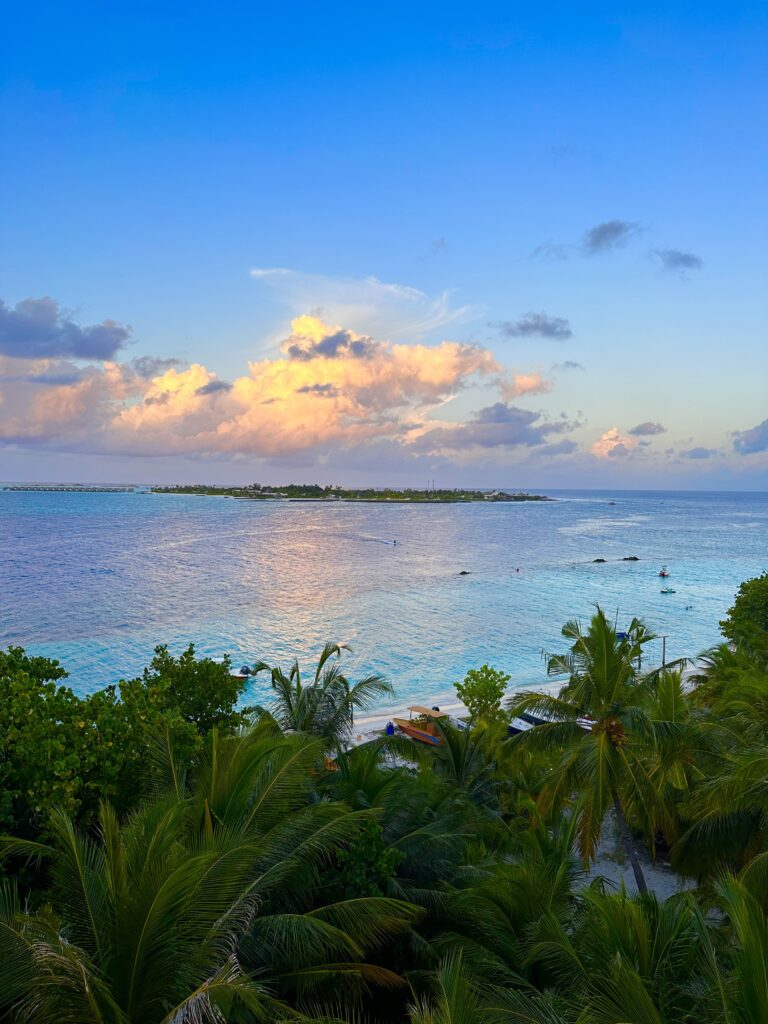
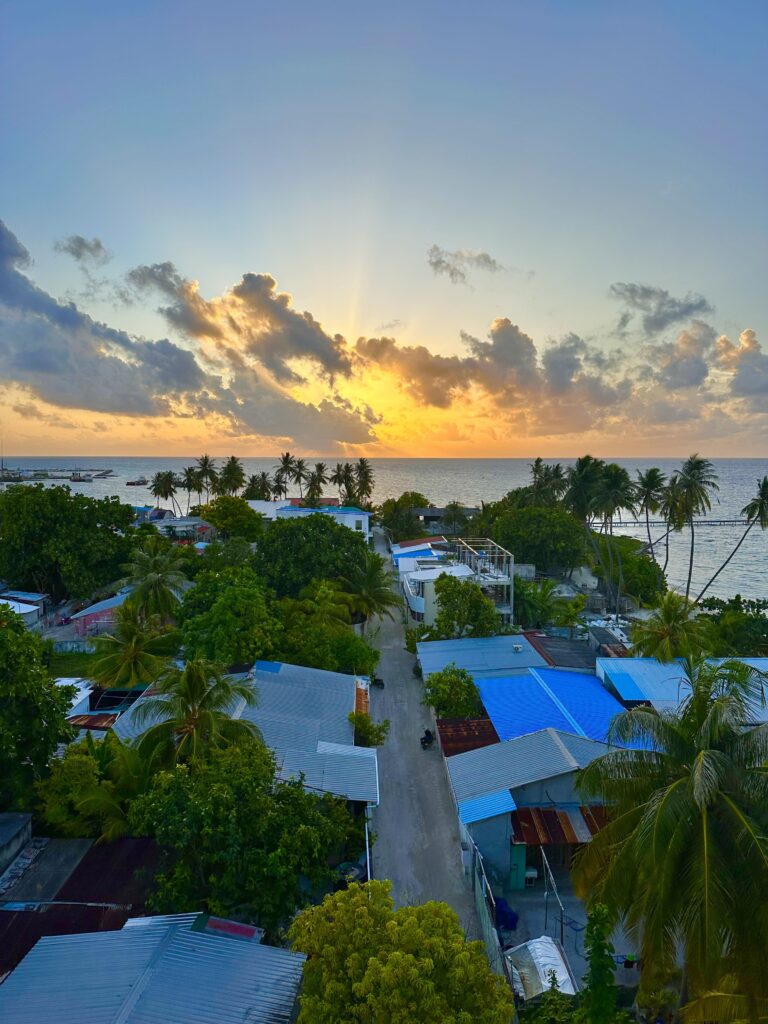
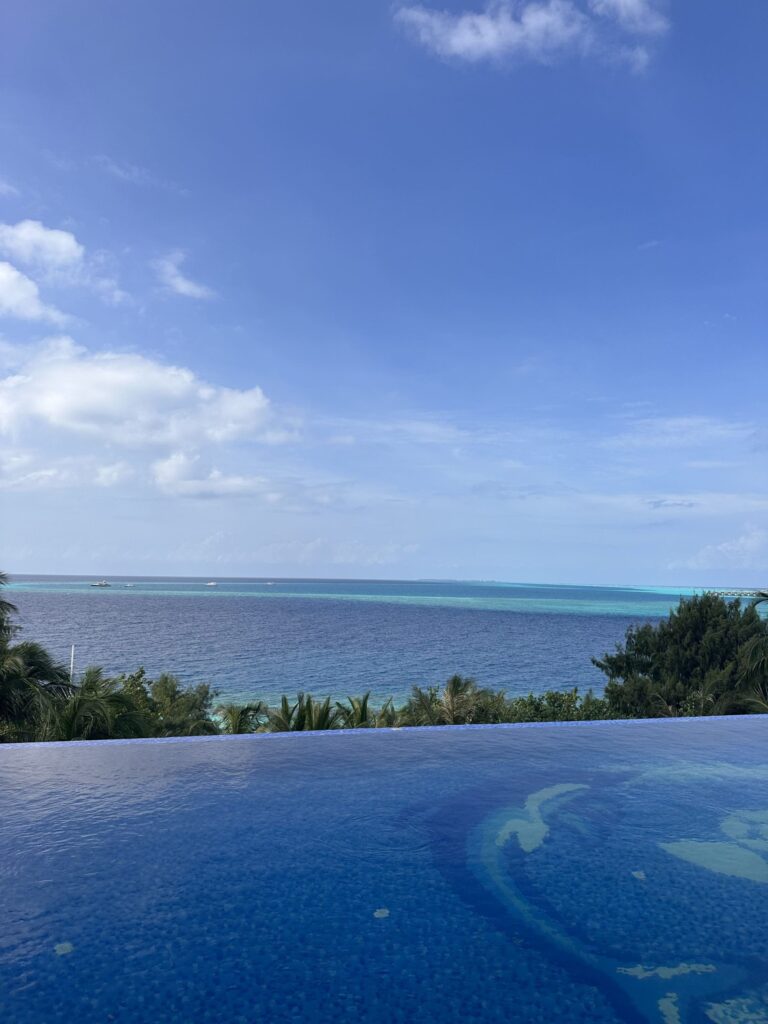
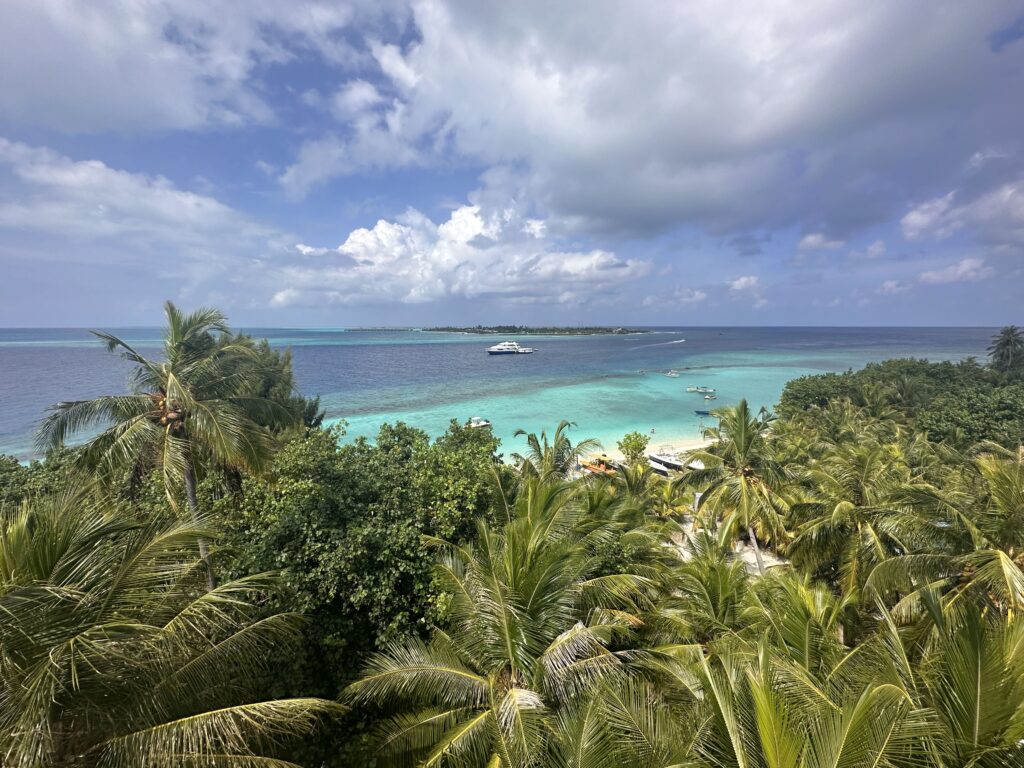
We actually stayed in one of the pricier hotels on the island (called Season Paradise). Which had a rooftop pool, gym and breakfast included. The views from the rooftop were amazing…
But in Thulusdhoo, you can find guesthouses and simpler hotels for as little as $32/night for a room with AC.
And that’s in the high season! Prices can be even cheaper in the low season. Well, maybe not a lot cheaper. I just did a search for May and that same room comes out to $30/night.
I checked Booking and the prices on other local islands (like Dhiffushi, Ukulhas, Fulhadoo, Dhigurah) are similar (between $50-$100/night for most rooms).
I can’t speak on behalf of the other local islands, but here’s what you can expect to spend in Thulusdhoo in 2026:
| Expense | Cost |
|---|---|
| eSim/phone coverage with Airalo (20 GB for 30 days) | $40 |
| A meal at a local restaurant | Around $6-$8 (including drink) |
| Hotel or guesthouse | $32-$100 per night (budget for $50-$100 to be safe) |
| Ferry from Male to Thulusdhoo | $3 |
| Speedboat from Male to Thulusdhoo | $30-$50 (one way) |
| Guided snorkeling trip | $20-$75 per person (depending on duration and destination) |
| Scuba dive trip | $100 (or $85 euros with scuba + gear according to this website) |
Here are a few ways to cut down on your costs:
Dine at the local restaurants
We found the prices at our hotel to be quite expensive (around $20 per meal if I remember correctly) so we only ate there a couple of times.
Otherwise, we ate out at local restaurants every day, where we paid around $5-$8 per meal (with drink). The food was good too! Lots of seafood and curries.
In Thulusdhoo, some of my top choices are:
- Bandaha (delicious curries)
- Byyoni
- Onda (haven’t been yet – believe this opened recently but it has all 5-star reviews and looks good for coffee, juices and wraps)
- The Nexus Hub (this place also opened after I was there but it looks good with reasonable prices! Serves a bit of everything from fried noodles and sandwiches to pasta and salads).
One thing I found interesting was that the restaurants were mostly filled with local men and tourists. I don’t think I saw a single local woman dining out during our stay. From what I’ve read, many Maldivian women eat at home with family or in more private settings, while the men go out.
Bring your own snorkeling gear
Even if you aren’t a big snorkeler, you’ve GOT to try it in the Maldives. The underwater world is absolutely incredible:
Alright and last one…
Honestly, I’d argue that you don’t even need to scuba dive in the Maldives because there is soooo much you can see just snorkeling.
In Thulusdhoo (and I imagine the other local islands), there are stands along the beaches where vendors sell snorkeling excursions and rent snorkeling gear.
So if you don’t have space in your suitcase, you can always find a place to rent it. But costs will add up pretty quickly if you go snorkeling a lot like me.
Visit during the low season
I’m not sure if it makes much of a difference on the local islands but on the resort islands, prices are much cheaper if you travel off-season (May to October). With rates starting to drop in March/April.
For example, I just checked the resort where I stayed (Oblu Select Sangeli) and saw that the price for January and February 2026 was around $1,025 per night on average. And $1,060 per night for a water villa (which is where I stayed with my ex).
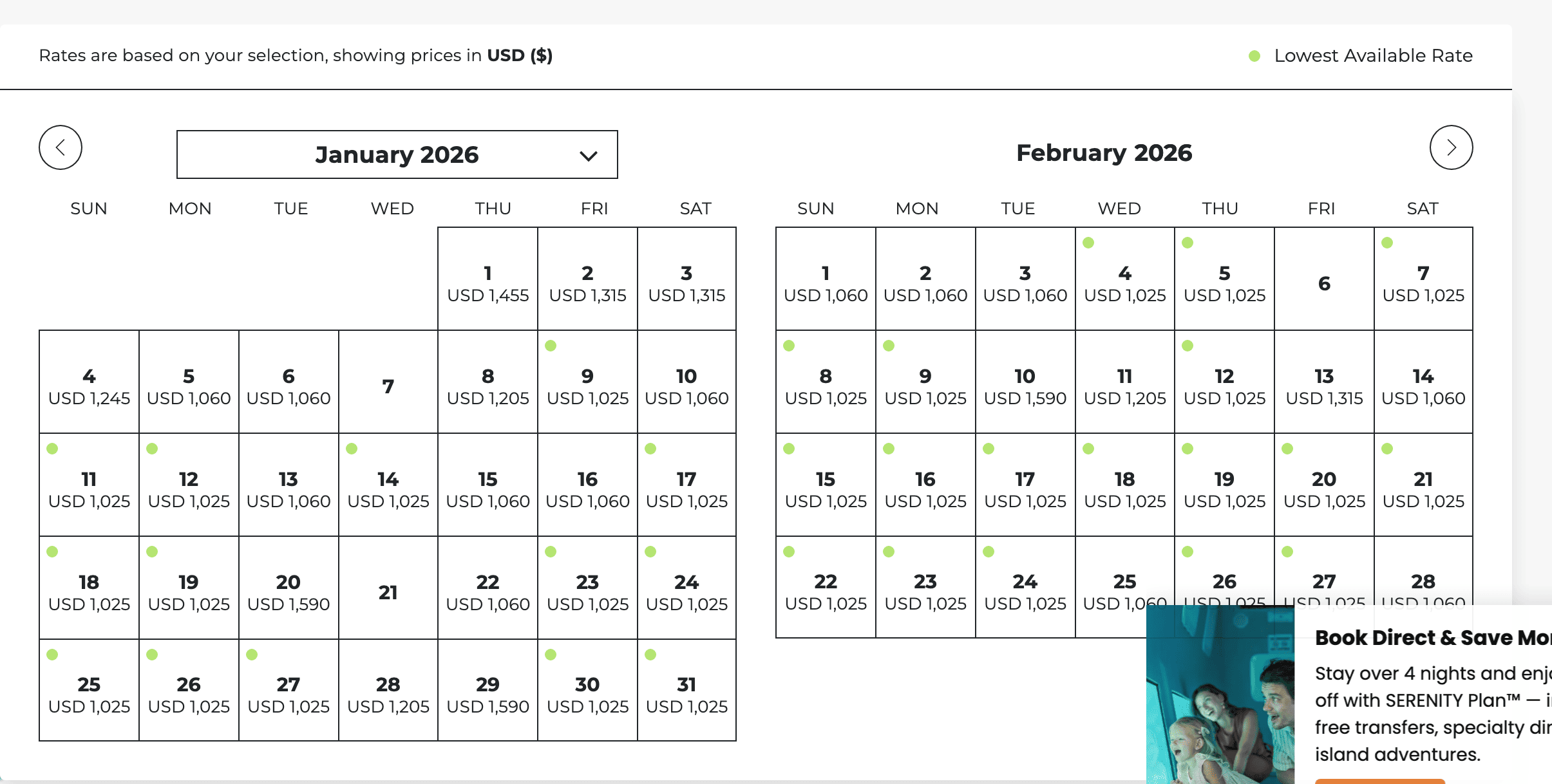
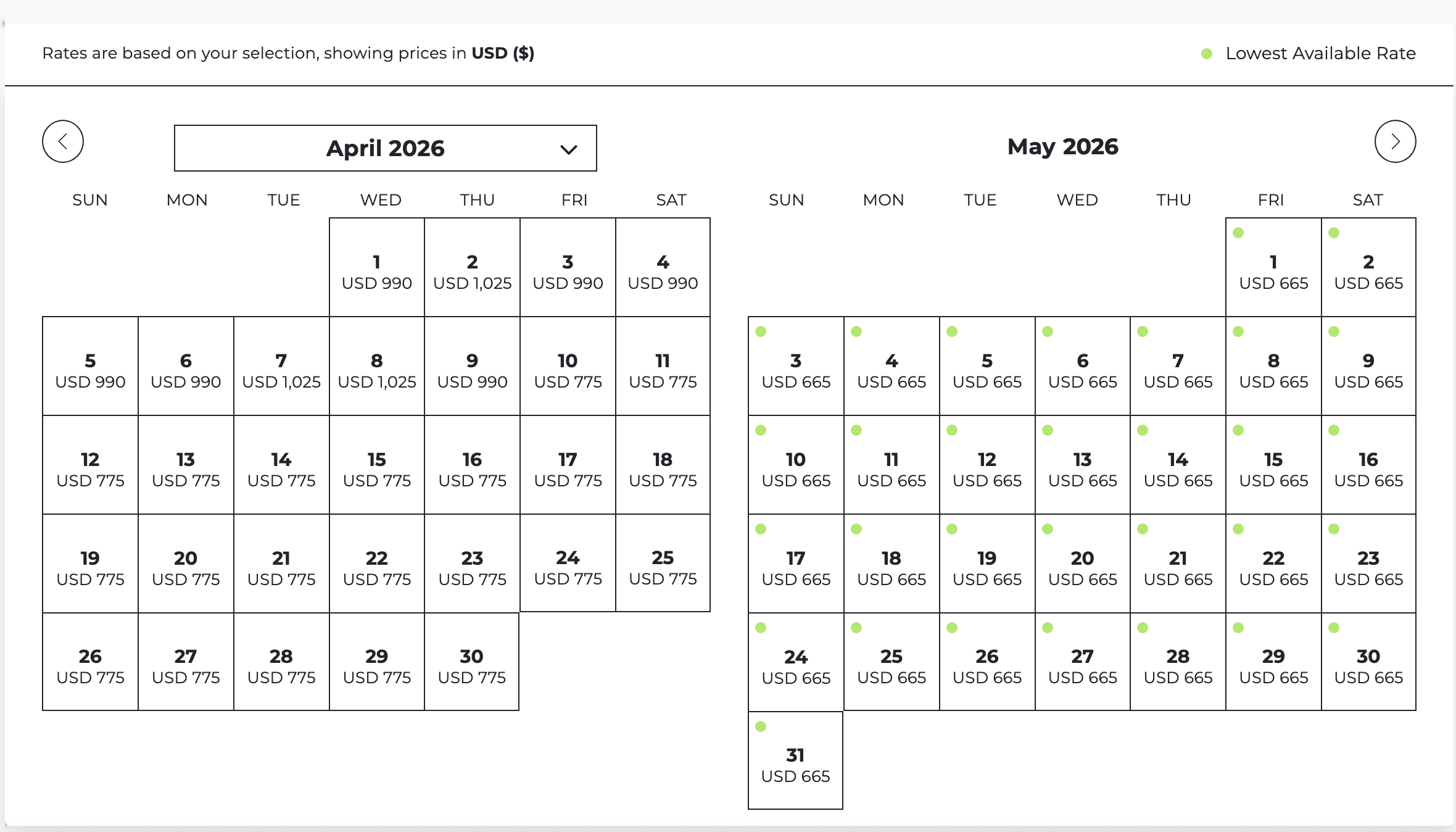
But during April and May, the price is significantly cheaper (around $775 per night in April and $665 per night in May):
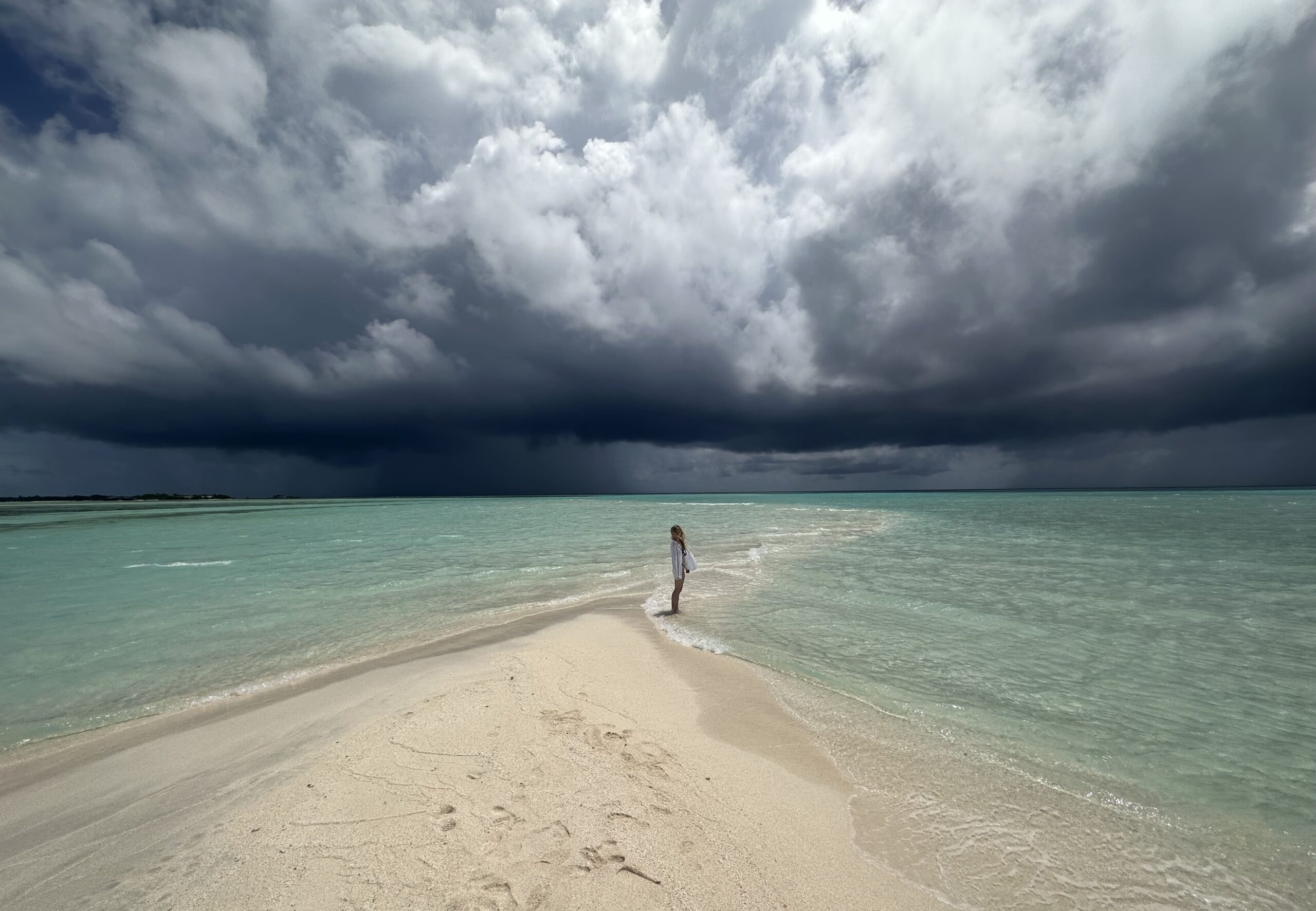
Maybe we lucked out but we had great weather in May. Sure there were some afternoon thunderstorms from time to time but we still got a lot of sun especially in the morning and early afternoon. Plus, the thunderstorms made for some pretty cool photos at times…
A few other things to note about the local islands
No alcohol or pork is allowed
The Maldives is a Muslim country, so alcohol and pork are banned. Resort islands are the exception, since they’re licensed to serve alcohol. But on local islands, you won’t find any restaurants or shops selling alcohol. The no alcohol thing was actually kind of nice though. We went to bed early, woke up early and felt like we really made the most of each day.
That said, Thulusdhoo does have a bar boat where you can grab a drink. A beer runs about $7, so it’s not exactly cheap… but it’s worth checking out at least once, even if you don’t drink. If nothing else than for the experience!
To get there, you can take a boat from the main beach. Costs around $10 USD round trip. You can reserve via Whatsapp (+960 787 4917) or just go to the beach and ask someone to take you – before sunset obviously.
There are wake-up calls every day around 4AM
Each morning, you’ll hear the call to prayer broadcasted over loudspeakers across the island. It starts around 4AM and is loud enough to wake up most people. Unless maybe you’re a really deep sleeper and use earplugs. But even then… it’s hard to miss it. Sounds a little something like this…
No bikinis allowed (except on bikini beaches)
Because the Maldives is a Muslim country, locals dress very modestly and there are strict rules around what you can and can’t wear.
On the resort islands, anything goes (well, except nudity of course). But on the local islands, women aren’t allowed to wear bikinis — except at designated “bikini beaches” (you’ll see signs for this).

From what I understand, men are allowed to take their shirts off and wear swim shorts anywhere (not fair I know).
It’s time-consuming (and expensive) to island hop
If you’re planning on island hopping, it will require a bit of planning and patience.
The public ferries (which are the cheapest but slowest option) run on fixed schedules (often 1x per day or a few times per week) and they don’t run on Fridays since it’s a religious day. But they can be a good option if you have a flexible time schedule and don’t mind a long boat ride.
The shared speedboats are obviously faster but pricier. They can range from $30-$100+ one-way depending on what island you’re going to. You’ll need to check with your hotel or guesthouse to find out when they’re running and reserve a time.
You may need to go back through Malé before continuing on to another island — particularly if you go to a resort island. When we traveled from Thulusdhoo to our resort island, we had to go back to the Malé airport and then take a separate boat from there – even though Malé was in the opposite direction.
This is because the resort islands require you to book transportation through them. Many resorts offer transports by speedboat or seaplane. With seaplanes being the faster, more scenic and significantly more expensive option.
Many places only accept cash
On the resort islands, you can pay for everything with credit card. But on the local islands, many places only accept cash. In Thulusdhoo, there was one ATM on the island but I’m not sure how it is on other local islands.
So if you’re going to a smaller, more remote island, make sure you bring enough cash for the entire trip. Many places do accept USD but it’s a good idea to carry some Maldivian dollars with you in case smaller shops or restaurants don’t accept USD.
PDA is not allowed
On the resort islands, anything goes. But on the local islands, any sort of PDA (or public display of affection) like hand-holding or kissing is a no-no and considered very offensive in Maldivian culture.
It’s illegal to take shells, coral or sand from the beach
They may check your bags when you leave and if you’re caught, you could face a hefty fine (or worse).
Not only is it illegal, it’s also not good for the ecosystem. Shells provide homes for tiny creatures like hermit crabs, nesting material for birds and shelter for small fish. Like this little guy…
Removing them throws the whole ecosystem off balance. Shells and coral also help protect the beach from waves and erosion so when they’re taken away, the shoreline wears down faster over time. And the “but it’s just one” mentality doesn’t really hold up if everyone thinks the same thing.
I get the temptation — there are sooo many perfect shells in the Maldives. But photos go a long way and leaving them behind means the next person gets to enjoy them too. Win win 🙂
